Case study
The fight for East Tremont
One mile, two routes, and a neighborhood that was not consulted.
Two routes
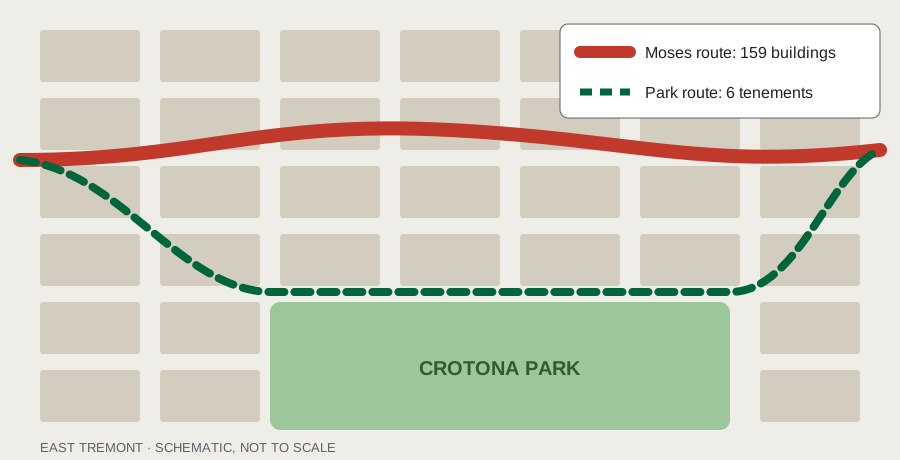
The fiercest fight was in East Tremont, a crowded neighborhood of apartment buildings and small shops. Moses's route went right through it, requiring 159 buildings to be torn down. By his own count, that meant 1,530 apartments housing about 5,000 people. A route two blocks south, along the edge of Crotona Park, would have condemned only six small tenements housing 19 families.
"Just a housewife"
Residents rallied under Lillian Edelstein, a local mother who ran the East Tremont Neighborhood Association. They held rallies, lobbied city officials and showed that the alternative was possible. It didn't matter. The Board of Estimate approved Moses's route in 1953, and tenants who had received eviction notices were thrown out.
Telling the story
The story became famous through Robert Caro's 1974 biography of Moses, The Power Broker, which devotes two chapters to that single mile. Caro said the choice of route showed how unaccountable power works: not through cruelty, but through indifference to people who can't fight back.